Showing posts with label hair transplant. Show all posts

Sunday, June 11, 2023

The Potential Benefits of PRP Hair Loss Treatment: A Breakdown


Unfortunately, we live in a time where premature baldness and male pattern baldness are pretty common. People's poor lifestyle choices are responsible here. Such problems have given rise to a slew of effective hair treatments. Are you also struggling with hair loss and looking for a safe and effective solution? Platelet Rich Plasma (PRP) hair loss treatment is the answer you've been searching for. This non-surgical procedure involves injecting a dose of platelet-rich plasma into the scalp to stimulate hair growth and thicken hair. The dermatologist simply removes blood with a needle and then injects platelet-rich plasma into the specified spot. In this blog post, we'll break down the potential benefits of PRP for hair loss.  

·         Stimulates Hair Follicle Growth

Platelets of your own collected blood include growth factors, which stimulate and encourage hair development. PRP injections into the scalp are able to give life to dead hair follicles which results in increased hair growth for fuller head. It has the potential for positive effects for the majority of people within three months. Even the rest can see obvious changes in their hair growth within a year.

·         Safe and Natural

Being non-invasive and non-surgical is the biggest green flag in effective hair treatment. But the main reason this process is so safe is that you use your own body cells. Because PRP hair loss treatment uses the patient's own blood, there is no chance of allergic reactions or treatment rejection. Also, the growth factors in PRP are organic nutrients that are produced by the body, making it a safe and natural choice for hair regrowth.

·         No Scarring as its Non-Surgical

People who are concerned about apparent scars from surgical hair treatments such as hair transplant surgery might consider this interesting. Because nobody wants to go through a therapy that would leave them with scars. Fortunately, PRP hair loss treatment is not one of them. As the process only uses needles, there are no wounds or scars on the scalp. While hair transplant surgery can help restore hair growth, it usually requires creating incisions on the scalp, which can leave noticeable scars.

·         Minimal to Bearable Side Effects

PRP hair loss treatment tends to be generally favourable as there is no surgery involved in the therapy, the patient will only feel little discomfort when the injection is injected. Even the pain varies depending on where it is being treated as well as your pain tolerance. Dermatologists use local anaesthesia on patients who have very low pain tolerance levels. This will ensure that you do not experience any discomfort., with minor discomfort and swelling at the injection site. These problems usually go away with pain killers within a few days.

·         Little to Almost No Downtime

In today’s busy life, everyone wants quick and easier method to get rid of anything they dislike. PRP hair loss treatment might be a highly handy choice for those who are interested in restoring their hair without major downtime or disturbance to their everyday lives. PRP therapy is a minimally invasive technique that usually takes less than an hour. You are not required to spend the full day at the clinic. After session you can leave immediately even for the office or meeting after the treatment.

Final Words

PRP treatment for hair loss is a promising option for individuals looking to improve the appearance and health of their hair. The PRP hair loss treatment has a track record of success in treating thin hair line and baldness. If you are experiencing hair loss, it may be a good option. Deciding on a qualified surgeon is equally important as choosing a suitable treatment because surgeon and clinic can make or break your whole hair treatment experience. If you live in Pakistan, Surgeon at ILHT Pak has years of expertise with PRP treatments and can help you regrow your hair.

Friday, February 3, 2023

Causes and Effects Behind Hairfall

 In today’s fast-forward lifestyle, hair loss and baldness have become universal concerns. Hair fall is not an immediate incident. It takes time to reveal itself after a certain impact. Hair fall occurs after a time lag of around two to three months. It is a process that occurs when the hair roots lack sufficient nutrients and blood supply.

Three major causes of hair fall can occur at any age. Physical, emotional, and mental stress can cause hair loss and baldness. Revive your hair growth with the best hair transplant in Dubai and boost your confidence for a better lifestyle.


Causes of hair fall:


Physical Causes:

Physical causes are connected to your physical body. Remember, you are what you eat, and your hair is what your system is.

If any man or woman is taking medicine for a specific illness, such as antidepressant medications like lithium. Other than this, excessive intake of vitamin A can also cause hair loss.

Patients who are suffering from various malignancies like chemotherapy or any other physically stressful therapy


Deficiencies:


If a person is following or has even followed Crash or any specific diet intake for weight loss, that can lead to various deficiencies in your body, and eventually, your hair root will not get sufficient blood supply. This is how it will affect hair growth.

Any other required ingredient could be iron, protein, zinc, or other micro-deficiencies of essential minerals, such as copper. These are among the most common causes of hair loss in both men and women.

Hormonal disorders can also lead to baldness or hair loss. Thyroid dysfunction can be one of the causes of hormonal disorders. It can be Hyco thyroid or Hypo thyroid disorders. Hair loss is the first symptom of both thyroid disorders. The other symptom of the thyroid is increased weight, decreased weight, or tiredness, but the most annoying is hair fall.

One of the other most common hormonal disorders in women these days is PCOS (Polycystic Ovarian Syndrome). This is common in today's lifestyle, which is characterized by hectic schedules, stress, poor diet, and little time for exercise or self-care.


Mental and Emotional Stress:


Whenever the person suffers from any sort of emotional or mental stress. Parent-child separation trauma, divorce or after-marriage adjustment problems, miscarriage, or exam stress and anxiety may occur. Emotional or mental stress causes the adrenal glands to over-activate, resulting in hormonal imbalance and hair loss.


Again, the hair loss does not occur immediately. It occurs between two and three months after you have undergone any imbalance, disorder, medication, diet, stress, or trauma in your life.


Prevention is better than cure. The best hair transplant in Dubai suggests their patients pay attention to themselves on every new day of life. 

Monday, January 9, 2023

Essential Nutrients Intake After The Hair Transplant Surgery

After a hair transplant in Dubai, it is necessary to follow post-operative care and a balanced diet to get the desired results. Magnesium deficiency can cause weakness as well as hair loss. A high-protein diet includes chicken, fish, eggs, milk, cheese, beans, and nuts. Omega 3 fatty acids are essential for various bodily functions. Iron assists in transporting oxygen and essential nutrients to your hair follicles, promoting hair growth, and works as an effective wound healer after the surgery. Vitamin E is mainly found in vegetable oils, especially sunflower oil, soybean oil, and corn oil. Research has shown that vitamin D plays an important role in hair growth.


Essential Nutrients Intake After The Hair Transplant Surgery


Do you know our body supplies nutrients from our diet to the other organs first, and only the leftover nutrients are supplied to the hair? That's why nutritional deficiencies get reflected first in your hair growth. 

A deficiency of essential nutrients can weaken and thin the hair, increasing hair fall and creating bald patches. After going through a hair transplant in Dubai, it is necessary to follow post-operative care along with a balanced diet to get the desired results. 

What to eat after a hair transplant and what not to eat? Which foods promote hair growth?


The growth of transplanted hair is difficult for people suffering from nutritional deficiencies. It is important to make dietary changes and consume the right nutrients in the required proportion. However, in some cases, diet alone cannot meet the dietary requirements, and nutritional supplements may be needed. 


You are what you eat. It is important to include calcium-, magnesium-, zinc-, iron-, protein-, and vitamin B-containing foods in your diet. They help maintain the health of your hair follicles and stimulate hair growth. Following are the foods that promote hair growth. 


Magnesium participates in biochemical reactions at the cellular level. It also helps to maintain glucose levels but also plays a role in protein and energy production. Magnesium is essential for metabolic reactions and better hair growth. Magnesium deficiency can cause weakness as well as hair loss. 


Hair is made entirely of proteins. Incorporate protein into your diet. That's why during hair transplant recovery, a high protein intake is recommended by doctors. A high-protein diet includes chicken, fish, eggs, milk, cheese, beans, and nuts. These foods are rich in essential amino acids. 


Omega-3 fatty acids are essential for various bodily functions. Oily fish such as salmon and mackerel are good sources of essential fatty acids. Vegetarian sources include flaxseed, walnuts, avocados, etc. 


The vitamin B family incorporates vitamins 7 (biotin) and B12. They play a very important role in your hair structure and growth. They are also involved in the metabolism of proteins and fats. It facilitates better wound healing. This is why doctors recommend B-complex and vitamin supplements after a hair transplant. Foods that are rich in vitamin B include chicken, meat, bananas, brown rice, nuts, and eggs. 


Zinc deficiency can cause serious hair loss. That's why it is important to include zinc in your diet after the hair transplant procedure. It helps in tissue repair and collagen production. Cashews, spinach, and pumpkin seeds are foods rich in zinc. 


Hair loss occurs due to improper blood circulation over the scalp. Iron helps in maintaining proper blood circulation over the scalp. Iron assists in transporting oxygen and essential nutrients to your hair follicles, promoting hair growth, and works as an effective wound healer after the surgery. 

Vitamin E is a fat-soluble vitamin that protects your cells and tissues from free radical damage. Vitamin E is mainly found in vegetable oils, especially sunflower oil, soybean oil, and corn oil. All nuts, such as peanuts or almonds, are rich sources of vitamin E. 


Vitamin A is a powerful antioxidant that stimulates hair growth. However, excessive vitamin A can also be harmful and cause hair loss. Vitamin A-containing foods include vegetables, oranges, carrots, pumpkins, and sweet potatoes. Cod liver oil and beef liver are also rich sources of vitamin A. 


Vitamin C helps with iron absorption. Vitamin C-rich foods include pepper, kale, kiwi, broccoli, berries, and citrus fruits. 

 Vitamin D helps in maintaining blood levels of calcium and phosphorus and in strengthening your hair follicles. Research has shown that vitamin D plays an important role in hair growth. Dairy products, mushrooms, cereals, fish, and other seafood are good sources of vitamin D. Vitamin D2 is usually found in vegetables, while vitamin D3 is found in sunlight and eggs. Include green leafy vegetables in your diet after the procedure, as well as broccoli, spinach, tomatoes, and peppers. 


It is important to retain poor eating habits. Avoid processed foods and excessive sugar consumption. Avoid alcohol and cigarettes after hair transplant surgery. Furthermore, avoid any stress after the procedure. Avoid fast food, cold drinks, and other foods that contain no nutrients. Take your doctor's advice and follow the medications and supplements in the right proportions. Maintain a healthy and balanced lifestyle. Exercise regularly and manage your stress well. You will see great results from the hair transplant in Dubai.


Tuesday, November 22, 2022

Things you need to know before getting hair replacement


Description: Hair surgery is now common in males and females. But to enjoy best hair replacement in Dubai you need to know few things before getting it.

In recent years hair transplants have become popular. Before the evolution of new hair transplant procedures and equipment, it was impossible to get hair replacement. The International Society of restoration surgery (ISHRS) is the leading organization in the hair restoration industry. It introduces the newest and most modern procedures and equipment in the industry. Now hair transplantation gets a lot of popularity among males and females. But people always have some doubts whenever they think of getting a hair transplant.

There are a lot of people who wants hair transplant because hair loss affects them. People with hair loss are less confident, and they avoid gatherings. Hair loss affects their self-esteem. But you do not need to worry about it because hair transplant is available everywhere.

If you are also looking for the best hair replacement in Dubai, you need to know a few things before getting it. Such as information about treatment, whether it is painful or not, the recovery period, and some other doubts you have in mind. The best hair doctor always gives you a consultation before the treatment. In their question-answer session, you can ask as many questions as possible.


1          What do you need to know?

If you are planning to look for a hair transplant surgeon, then before getting surgery, you need to know a few things. Ask the following questions before getting a hair transplant so it clears your doubts, such as:

1.1       What are your expectations from hair surgery?

The first thing you need to set is your expectations and face realities. Such as every patient has their reasons for hair fall and has different donor areas. It is also possible that the pictures you see of hair transplants might have different conditions. People with less hair fall can have better and larger donor areas. But it might be possible that you don’t have enough donor area in your case. Therefore set your expectations according to your hair conditions.

1.2       How long will it take to get back to work?

It also depends on the hair treatment that allows you to return to work. If you are taking PRP therapy, it will take two weeks to get back to normal. If it is FUE, you can return to normal in one week. But in the case of FUT, it takes four weeks because it is a little bit painful.

1.3       How many surgeries do you need?

Before getting a hair transplant, ask surgeons about the number of therapies you need. It is a fact that it also depends on your hair condition and donor area. If your donor area is active and strong enough to support it, you need several surgeries accordingly.

Bottom-line

It is a fact that hair surgery is now getting popularity day by day. People are now becoming aware that it exists in reality. The hair restoration industry is now introducing so many modern equipment and procedures. But before getting it, you need to find out so many things about it as it is a sensitive matter. Once you select a surgeon, set an appointment with him, do an interview session, and clear your doubts. Get the best hairreplacement in Dubai and get back your confidence.


Monday, October 10, 2022

Hair Myths and facts you need to know in 2022


 Description: there are a lot of hair-related myths that affect hair growth and cause hair loss. Therefore before accepting they consult the best hair doctor in Dubai.


Everyone wants beautiful hair. Especially women always wanted to flaunt their smooth, silky hair. If so, you need to take care of your hair as hair loss, and hair fall are common these days, so people need to do some remedies to take care of their hair. When the hair restoration industry evolves, new methods and modern techniques exist for natural hair growth. People are now more into hair treatments. But there are a few myths regarding hair that people hear from others and believe. Most of them were wrong, but people still believed their peers. These myths might damage your hair. Therefore the best way is to find the best hair doctor in Dubai to eliminate these issues. 


The most worrying thing about these hair myths is that people accept them as scientific facts and trust these fake myths, such as regular trimming grows hair faster. Trusting this myth is one of the main reasons for hair fall and hair damage. Hence you need to break these myths and figure out what reality is. The National Institute of Health also argues that when people trust and accept these myths, they do not take treatments, or the treatment process becomes less effective.

Facts and myths

Following are the common myths that people accept as facts. It is harmful to hair. Let's see these facts and myths so you can start treatment at an early age.

1.1       Myth1: regular combing produces healthy hair

Fact: it is a myth that when regular comb your hair or 100 strokes of brush per day produces long and strong hair. But it is not true. When you brush hair with a comb roughly, it causes damage to your hair. It breaks the hair and weakens the hair roots. However, if you comb hair gently, then it stimulates blood circulation and helps hair growth. In addition, you can also use a synthetic brush for hair.


1.2       Myth 2: regular trimming stimulate hair growth

Fact: Most people now accept this myth as a fact that if you cut your hair ends regularly, it will fasten your growth. But it is not true because it only removes your split ends. When you cut the end notes, it does not affect your hair follicles. However, regular trimming stops the split ends. According to the Trichology society study, seasons also affect hair growth, as in summer, hair grows faster because of blood circulation. But in winter, hair growth slows down due to a diversion in blood flow.

1.3       Myth 3: regular use of shampoo damages hair strands

Fact: your hair needs regular cleaning. Hair strands catch dust and dirt particles when you go outside for work. It also weakens the roots. So shampoo cleans all these dusty particles from your hair. Use natural shampoo rather than chemical shampoo. And use natural oils for hair massage. It gives health to your hair but does not damage them. 


1.4       Myth 4: natural oils are good for hair nourishment. 

Fact: yes, natural and essential oils are good for hair growth. Use oils made from almond, curd, or honey, which are essential for healthy hair and growth. It also reduces hair fall. But make sure to shampoo it briefly after applying oil to your hair. 


Bottom-line

Hair fall and loss are common in males and females. They face many issues regarding hair fall, split ends, less hair growth, etc. Therefore they need to find the best hair doctor in Dubai to resolve hair issues. The hair mentioned above myths are dangerous for hair, so consider these myths before accepting them as scientific facts and consult your hair doctor first to find the best hair treatment. You can also check here how to fix hair split ends

Friday, June 17, 2016

Latest Technologies in Hair Transplant

Facing hair loss issue is not limited to any region, country, cast, or gender; rather it is one of the universal problems the world is suffering from.  Since hair loss has become a common phenomenon and a large number of people around the world suffer from it, science has discovered many effective methods to deal to restore the lost hair.  
Today, there are plenty of advanced technologies used for hair transplant of men and women both. These technologies take little time and potentially help to combat hair loss. Some of the most advanced and successful treatments are given below:

Follicular Unit Extraction (FUE) Hair Transplant:

FUE hair transplant is one of the latest and successful methods of today and a large number of people have been treated successfully through this method during some past years.  In this technology, follicular units are extracted from that part where there is hair and then the units are planted in the recipient area where there is hair loss problem to restore hair.  The donor areas face no side effects or visible scars and the recipient area tends to restore hair successfully. Though this type of surgery takes many hours to complete, the results are quite adequate and satisfactory.  

NewGraft Restoration:

NewGraft restoration is also the advanced form of FUE hair transplant. In NewGraft, the process of extracting and planting follicular units is automated. By doing this, the process becomes more easy, comfortable, timesaving, and lesser traumatic harvest. To make this automatic process successful, a tiny surgical pouch is used to extract follicular units.  During the whole process of this hair transplant surgery, the patient is able to listen to music, talk with people, drink and eat anything, and perform other activities.

Platelet Rich Plasma Therapy (PRP):

PRP treatment is one of the advanced treatments of hair transplant.  In this technology,               autologous blood is taken from the patient’s body and then injected to bald parts of the scalp. By doing this, regeneration of tissues is occurred resulting restoring of hair on bald parts of the scalp. This type of treatment is done automatically and manually both but the manually treatment has been more successful than the automatic one because automatic treatments always have some side effects and risks.

Since science has no end and it advances with the passage of time, more and more studies are being done on this particular area of work to make it possible that every person on this earth can experience the beauty of hair and live with style.


Friday, September 18, 2015

Major FUE instruments of the hair transplant and their usage

Latest developments in instrument technology and improvements have now made the complicated follicular unit extraction (FUE) a method competitive with the common strip harvesting procedure for getting natural donor hair for the transplantation surgery.

In FUE method, a surgeon removes one particular FU - or follicular unit, at one time, aiming those grafts that appear most possible to increase and produce natural hair in a recipient site. It needs more ability of the surgeon and more charge from the transplant patient compare to the strip harvesting method. The FUE is an advanced and safer method than strip harvesting technique. Here are some FUE instruments, which are used for the FUE technique.

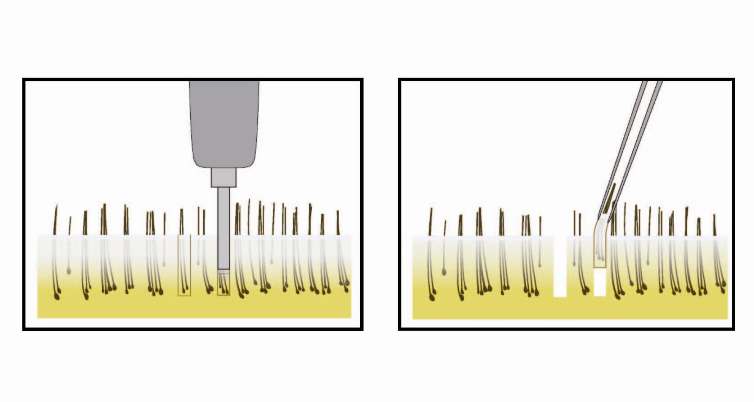
The Manual Punch Tool: The manual punch Tool is a round hollow sharp scalpel with a total diameter of 0.7 to 1.2 millimeter. This tool is the original FUE instrument. The tool’s punch is positioned over the visible part of a follicular unit's hair on the scalp, and pushed downward with normal manual rotation to cut the skin around the follicular unit and properly free it from surrounding hair tissue. The follicular unit is then extracted by the forceps.

The SAFE System: A special three-step manual procedure called The SAFE System. In the first step, it utilizes a sharp round punch to cut the skin around the follicular unit, now in a second step, a special blunt circular punch to release the follicular unit from surrounding tissue and in the last step is extraction.

Powered SafeScribe® Tool: The Powered SafeScribe® Tool is a handheld electronic gadget to remove the follicular units from the donor area with the minimal possibility of damage, and reserve for transplantation. A wide range of different punch sizes and types is easily available in the market. In skilled hands, this tool can decrease the total time of FU extraction procedure sessions, decrease the possibility of scarring, and give a high rate of intact FUs.

RotoCore Tool: This tool automatically rotates over the FUE as it cuts the skin around the follicle. The tool permits the surgeon to pre-set the punch to incise to a selected depth.
The Feller Instrument Tool: The tool combines complicated FUE procedures into a solo instrument to assist the surgeon work faster and more professionally.


NeoGraft Tool: This is a motorized device that gives a rotating sharp punch to cut the follicular unit, and a suction tool that extracts the FUE safely for the hair transplant surgery.

Wednesday, April 1, 2015

FUT VS FUE

Hair transplantation field has gone through several changes in past few years. Various hair transplant clinics and centers have been using a number of methods but FUT and FUE are most widely used hair transplant techniques that include transferring individual follicular units in their genetic form. Follicular Unit Transplantation is considered as traditional hair transplant methods that has now replaced by Follicular Unit Extraction. The basic difference between both procedures lies in extraction method while implanting process is almost same in both type of hair transplantation.  

FUE is advancement in Follicular Unit Transplantation in which hair are extracted from donor area in the form of follicular units. Follicular units are group of three to four hair. A small needle punch is utilized to separate follicular units from the surrounding tissue and creates small circular incision in the skin. The follicular Unit is then extracted directly from scalp which leaves a small open hole. Then, follicular units are placed onto recipient sites.

Follicular Unit Transplantation (FUT) involves extraction of strip of hair and tissue from back of the scalp. The, hair transplant surgeons dissect hair bearing strip into individual follicular units. The dissection is done under fiber optic equipped microscopes to prevent the application of heat to the grafts. Then, they are implanted onto bald region where the surgeon has made recipient sites. The suture or staple are used to close the wounds.        

FUE has a number of advantages over FUT hair transplant as it does not result in linear scarring. The healing time is fast. With minimally invasive nature, it produces hundreds of tiny scars in the donor area that are hard to detect. 


FUE hair transplant is the most refined approach to hair transplantation and best for those who want to wear short hairstyle or scalp is too tight or has existing damage. Pain and discomfort in FUE after the surgery is less as compared FUT hair transplant.


FUE can be repeated after one month but FUT cannot because it takes much recovery time. FUE is length and time consuming process and requires experienced and trained hair transplantation surgeons and standardized instruments.   

Tuesday, December 23, 2014

What things and instruction are necessary, if you are going for your Hair Transplant?

You will have been given a complete list of instructions to follow before your hair surgery. These instructions may vary according to the kind of procedure, e.g. follicular unit transplantation (FUT) but whatever type they take they must be adhered to.

The important instructions are mentioned below;
You have to discontinue smoking at least 24 hours before surgery. Smoking can influence injury healing process and also affects your scalp improvement so stop or if you are unable to then put it temporarily on hold until after your surgery.

Don’t drink or use any kind of liquor in the three days before your surgery.

Don’t go for any kind of hair cut before your surgery. It is essential to let the donor area grow so that there is adequate for the transplant. Plus it will help to hide the stitches.
Start massaging your scalp daily about a month or two weeks before your surgery. And make sure you should do this for at least 10 minutes per day or a maximum of 30 minutes if possible. This will assist to soften the scalp and improve the blood flow in that area.

Don’t use any kind of anti-depressing tablets two weeks before surgery. Your doctor will give you with a list of what medications you can and cannot take before surgery.

If you are above 45 then you have to show your blood tests and an ECG reports to your surgeon before transplantation.

Don’t take any kind of steroids/multivitamins or herbal supplement two weeks before hair transplant surgery.